
The pattern is familiar. A partner reads about a tool, the firm subscribes, two people try it, and three months later it is a line on the credit card statement. The tool was rarely the problem. Nobody decided what work it was for.
Hand-offs, not features
Every firm runs on hand-offs: the moment a task passes from one person to another, or from a person to a system and back. An enquiry arrives and someone has to reply. A meeting ends and someone has to write it up. A file is missing a document and someone has to chase it. Each hand-off is a place where work waits, and waiting is where a practice loses time and clients lose patience.
AI earns its place at hand-offs, because a hand-off is a multi-step task with a clear trigger and a clear finish. That is the shape of work an agent does well. Feature lists do not tell you where your hand-offs are. Only your team can.
The afternoon exercise
You do not need a consultant to start. You need ninety minutes and the people who do the work.
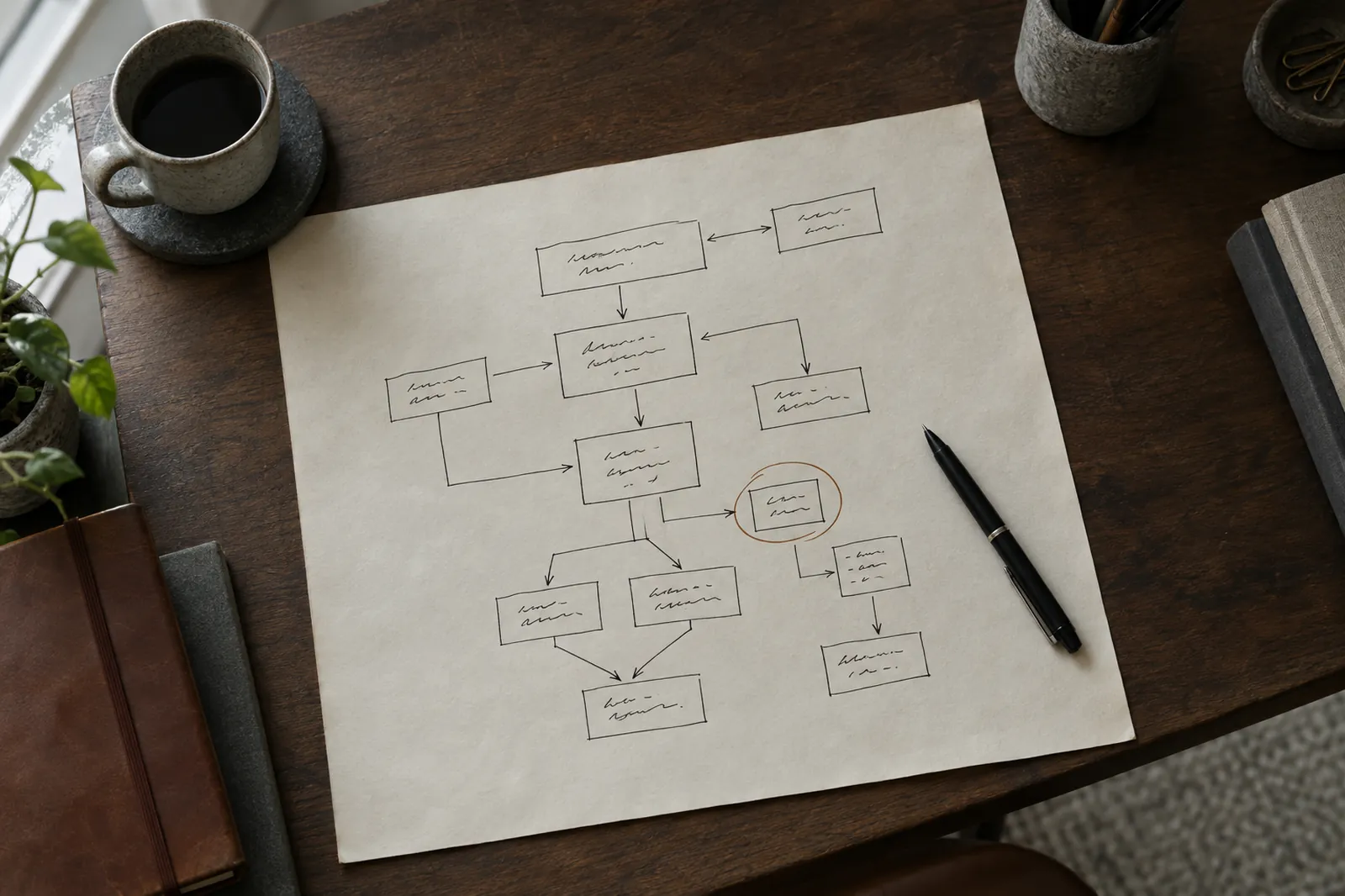
- List the triggers. What events happen in a normal week that create work for someone? New enquiry. Meeting booked. Meeting finished. Document received. Date reached. Client question. Write them all down, even the small ones.
- Follow each trigger to the finish. For each one, what are the steps, who does them, and where does the information live at each step? You will find the same CRM, calendar, inbox and document folder showing up again and again.
- Mark where it waits. Circle every step where the task sits in someone's queue. Those circles are your map.
- Mark what must be reviewed. Put a square around every step where a human must approve before the next step happens. In a regulated firm there will be several. Those squares stay human, by design.
- Score the circles. For each waiting point: how often does it happen, how long does it wait, what does a mistake cost? A weekly task that waits two days and touches clients outranks a monthly task that waits an hour.
The top three circles are where AI belongs first. Only now does it make sense to ask which tool.
What the map changes
Three things happen once the map exists. The conversation in the firm moves from opinions about AI to decisions about specific tasks. The budget becomes defensible, because every dollar points at a named hand-off with a known cost. And the team stops seeing AI as something being done to them, because they drew the map.
This exercise is, in short, the first hour of The Audit. Firms that do it themselves arrive with better questions. Firms that want it done thoroughly, scored and sequenced, book the call.